
The crisis of vulnerable children in South Africa and how one person’s life can make a difference
Overwhelmed, anxious, exhausted, weary, apathetic.
These are all words that could have described how I was doing in 2014.
After spending eight years living abroad as a missionary, immersed in foreign cultures, serving the poorest of the poor and not looking after myself I was diagnosed with chronic fatigue or in layman’s terms burnt out. Completely and utterly depleted, I returned to South Africa.
I had been fuelled by zeal and compassion and had overextended myself, not knowing anything about trauma responses, the wisdom of my body, the importance of rest or nervous system regulation. The one thing I knew was that I couldn’t continue living the way I had and I needed to take responsibility for my own personal renewal. The first step was to take a sabbatical. One whole year to focus on healing. Little did I know that woven into that year would be a tiny human being that would tilt the trajectory of my life towards my calling.
At first I didn’t have energy to do anything else other than rest. This was a foreign concept to me. There were days when all I wanted to do was climb Table mountain, but in reality I couldn’t even climb a flight of stairs without becoming breathless. It took three months for my body to start to feel normal again. I felt like I was coming out of hibernation. I didn’t want to while away the hours of each day as I knew that although the sabbatical was a necessity, it was also a gift. With the encouragement of my counsellor I made the decision to start volunteering at the local maternity hospital.
Wearing a baby pink pinafore apron I entered the special care ward for my first shift. Along the back wall were six bassinets with a baby in each one. My task was to help the nurse feed and change the babies. Equipped with nothing but my love for babies and natural mothering instincts I set to work. I’d reach down and swoop a baby up into my arms, making sure to disconnect the alarm at the base of the cot, change the nappy, wash my hands, and then decant already prepared milk into a small feeding cup, sit the baby upright on my lap and cup feed the baby, trying not to spill any milk in the process. After the feed I’d burp the baby, mastering a burping technique taught to me by one of the nurses in the ward. If there was time between each feed and no babies were in distress or crying, I would spend time cuddling and talking to each baby.
In the wing that I worked in there was a hierarchy in terms of care. The most important was the NICU,Neonatal Intensive Care Unit. There, babies get around-the-clock care from a team of experts. Most of these babies go to the NICU within 24 hours of birth.
Next was High Care one step down from the NICU but where all babies were in incubators and monitored closely.
Third was Special Care, this is where premature babies, babies who have a low birth weight or need care for neonatal health issues stay.
And along the back of the wall of the Special Care unit were the six bassinets for babies who were social cases for one reason or another. These precious ones were cared for by the nurses and volunteers until the social worker placed them into a foster or temporary safe care home.
They were not known by name, but by the month they were born. Their environment was sterile, spending time when they were awake staring up at a white ceiling, listening to the monitors beeping. My heart ached for each baby, knowing that they didn’t deserve this. I knew they were desperate to be close to their mothers, to be held in her arms, to hear her familiar voice. So much had been stripped away from them. I became even more resolute in my love for each of them, spending as much time as the hospital would allow.
And so, on one very ordinary day, this is where I found myself. Sitting on a plastic chair, feeding a baby. I can’t remember how busy we were that day, or how many babies were needing care. What I do remember is the sister in charge approaching me saying that there was a premature baby girl, born at 28 weeks in the NICU who needed KMC, kangaroo mother care, and would I be willing to provide the much needed skin to skin contact. You see, this tiny miracle of a baby was fighting for her life, and her mother had just lost hers giving birth to her. Isn’t life so hard and yet so beautiful?
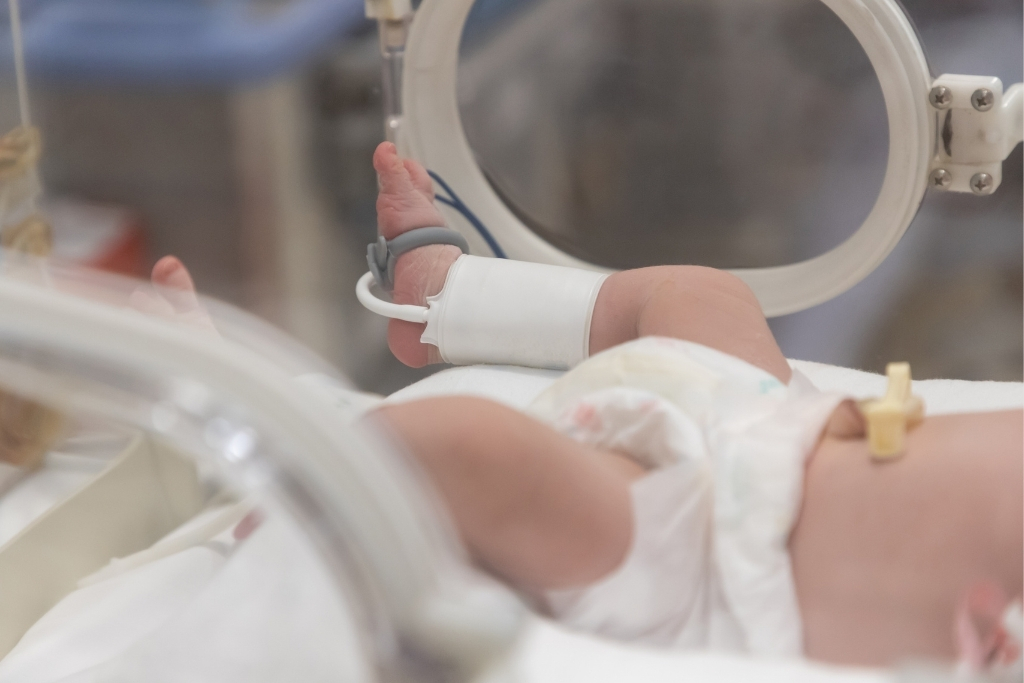
I made my way down the corridor, through the doors to scrub my hands and then entered the NICU where I found the tiniest human I had ever seen. With the help of the NICU nurse, I lifted the baby girl out of the incubator and onto my chest. She was on CPAP to help her breathe as her lungs were underdeveloped, she had a nasogastric tube which was used for feeding and a pulse oximeter. There were so many wires, but after getting her settled she fell straight back to sleep, skin to skin. Her stats increased as I prayed over and sang songs to her. A thought crossed my mind, I could do this for the rest of my life.
Over the course of 8 weeks I continued to do skin to skin with her, spending a couple of hours with her everyday. I became her safe place. She became my little anchor. She grew beautifully, graduating from the NICU, high care and finally discharged from special care. A vulnerable child who had gone through so much trauma had changed the course of my life.
Sue x